
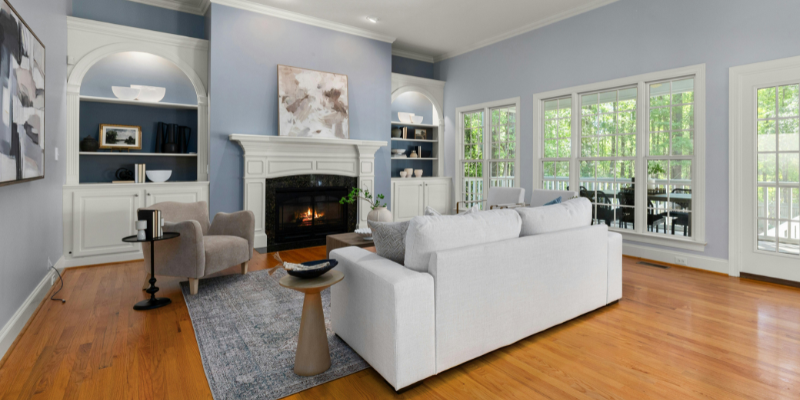
Walk into an empty Florida living room in July, and you’ll feel it before you see much of anything. Sound bounces off the tile, heat hangs in the corners, and the rooms look smaller than the floor plan promised. Buyers pick up on that too, and they blame the house, often before they’ve made it past the foyer. Stopping that reaction is the whole job of staging, and it’s why sellers from Jacksonville down to Marco Island ask me the same question before they list: what’s the cost to stage a house in Florida? They want a number. A real one, and not a range so wide it tells them nothing.
So let’s put real figures on it, along with the cases where writing that check is the wrong call. I’ve bought houses in every condition Florida can throw at you. Some of them should’ve been staged. Plenty shouldn’t have been.
What Is Home Staging and Why Does It Matter?
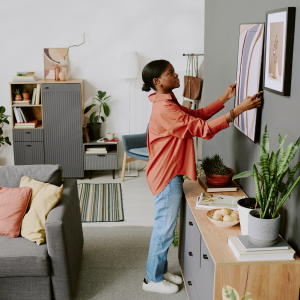
You’d think staging just means decorating. New furniture, fresh pillows, a bowl of lemons on the counter. Then you watch a good stager haul half your furniture out to a truck and leave the room emptier than she found it. That kills the decorating theory fast. Staging is really spatial editing, and a home stager isn’t trying to make your property pretty. She wants the size, flow, and purpose of each room to read at a glance, because a buyer scrolling listing photos gives each one only a moment before swiping.
Buyers’ agents back up the visualization effect. NAR’s 2025 Profile of Home Staging found that 83% of them said staging made it easier for a buyer to picture the place as their own. Nearly half of sellers’ agents, 49%, said staging cut the time a listing spent on the market.
This is where I part ways with a lot of REALTORS I respect. Staging gets oversold as a cure for every listing. The same NAR report found only 21% of sellers’ agents stage every listing they take, down from 23% in NAR’s 2023 report. The pros who do this daily have gotten picky, and sellers should too.
Photography carries most of the weight. Your buyer first meets your house on a phone, usually at night, usually in bed. A room that looks fine in person can look cramped and yellow in a photo, and the reverse happens too. I’ve seen plain three-bedroom properties in Ocala photographed like a magazine spread because somebody moved a recliner and opened the blinds. Staging does fix real problems. Awkward room shapes get easier to read. Dated paint stops making a room look dirty. A bedroom that could pass for an office starts looking like a bedroom again. Buyers ignore Florida lanais all the time, and two chairs and a rug turn a concrete slab into a selling point.
Some things it can’t touch: a roof no insurer will write a policy on, a 1978 kitchen, or a price that’s 8% too high. Furniture has never solved a pricing problem, and I’ve watched sellers spend real money trying.
If staging feels like more money and work than the house is worth, you can skip it and request a cash offer from Cash for Houses Pro. We’ll look at the property as it stands, without requiring you to stage, make repairs, or prepare it for showings.
How Much Does It Cost to Stage a House in Florida? (Including Key Price Factors)
Guess wrong here, and you could be writing checks for four months on a house that was never going to sell at that price. That’s the real risk, more than the staging fee itself. When sellers ask me the cost to stage a house in Florida, I start with national data. Angi’s 2026 figures put the average at $1,846, with most people paying between $830 and $2,917. Treat those as a starting point, since they aren’t Florida numbers. Angi also puts per-room staging at $300 to $700 per month, which lines up with the seller invoices I see. A well-presented home also attracts cash home buyers in Tampa and the surrounding Florida cities.
Vacant is the expensive word. With no furniture to work with, everything comes in on a truck. HomeGuide’s 2026 figures put vacant staging at $3,000 to $6,000 and up, and furniture rental alone can reach $2,000 a month on a large house. Occupied staging costs far less, since the stager edits and fills in each room around what you already own.
A handful of things move your price inside those ranges, and some have nothing to do with your house. Square footage and room count set the furniture inventory. That decides how big the truck is and how many hours the crew bills. Stagers don’t dress every room, only the ones buyers care about most, and in NAR’s survey, buyers’ agents ranked the living room first, then the primary bedroom, then the kitchen.
Season is the Florida variable nobody prices in. Stagers in Naples, Sarasota, and Palm Beach can run short on inventory from January through March, when snowbird-season listings hit at once. Price the same house in summer and again in January, and you may hear two different numbers.
Condo buildings add friction that ends up on your invoice. High-rises in Brickell or along Gulf Shore Boulevard often want a certificate of insurance from the staging company, a reserved elevator window, and a move-in deposit. Ask your building’s management office what they require before the truck shows up.
The electric bill catches people off guard too. A vacant staged home in August needs the AC running. Skip that and the humidity can warp rental furniture and leave a smell no buyer forgives.
How Do You Budget for House Staging Costs When Selling a Home?

Staging bills by the month, and the meter keeps running after you accept an offer. A financed sale usually takes another 30 to 45 days to close. The furniture stays put through every showing, the appraisal, and the final walkthrough. People forget that line item all the time.
Build your budget on realistic market time instead of hope. Redfin logged a statewide median of 73 days on market in August 2026. Two months at the low end of per-room pricing is a very different bill than four months at the high end. HomeGuide says each month past the first usually adds 10% to 30% of the original fee, so get your stager’s month-three terms in writing.
Then put staging where it belongs in the full cost of selling. Agent commissions, title charges, doc stamps on the deed, prorated taxes, and any buyer concessions all come out of your proceeds at closing. Staging works differently. You pay it up front, out of pocket, before a dollar of equity comes back to you. That timing hits hardest when money’s already tight. If you want the rest of that list line by line, see who pays closing costs when selling a house in Florida.
There are cheaper ways to set this up. NAR’s report put the median at $1,500 when sellers used a staging service and $500 when their agent staged it personally. Plenty of Florida REALTORS® fold light staging into their listing package. Ask before you hire someone separately, and ask what “included” covers.
Keep a repair reserve next to your staging money. I’ve watched sellers put every spare dollar into furniture, then have no cushion when the inspection turns up a failing water heater. Buyers ask for credits in this market. Anyone with nothing left in reserve usually gives up more than the credit was worth. If you’re considering an alternative, a company that buys homes in Clearwater and other Florida cities may buy the property as-is, without requiring you to stage it first. Save your invoices either way. Selling expenses can lower the gain you report when you sell, and a CPA can tell you which of your costs count.
Is Home Staging Worth the Cost?
Picture a vacant ranch in Winter Garden that’s sat for weeks with barely any showings. Stage three rooms, reshoot the photos, and it can go under contract quickly. That’s the story every stager loves to tell. Sometimes it plays out that way, though the industry talks about wins louder than misses. In NAR’s survey, 29% of sellers’ agents said staging raised offers by 1% to 10% over comparable unstaged listings. Another 30% saw no impact at all, and 34% weren’t sure.
So run your own math instead of borrowing someone else’s. On a $400,000 house in Viera, a 2% bump is $8,000 against maybe $2,500 in staging fees, which is a solid return. On a $200,000 property in Lake City with a thin buyer pool, the same bump is only $4,000. Your fees don’t shrink much, because the house still has the same number of rooms.
Staging tends to pay best on vacant properties and odd floor plans. It also earns its keep wherever buyers are comparing several look-alike listings in one subdivision. A Kissimmee townhome with a string of identical units for sale around it is the textbook case.
It pays worst on distressed property. If your house needs a roof, has a permit issue, or carries open code violations, furniture is just decoration on a problem the buyer’s inspector will find. Cash sales exist for exactly these houses. That’s why I tell sellers with deferred maintenance to price the repair honestly instead of dressing around it.
The middle case deserves a name. Some sellers can afford the staging fee but can’t afford the carrying months that come with a traditional listing. Think mortgage, insurance, taxes, lawn service, and pool chemicals. Florida homeowners insurance alone has made that math painful for many owners lately. Spending money to maybe shave a few weeks off a timeline you can’t afford isn’t a strategy. If you’re in that spot with a house near Lakeland, here’s how we buy houses in Lakeland FL as-is.
If staging doesn’t make sense for your property, contact us for a no-obligation cash offer as-is. You can skip the staging, repairs, and waiting and decide whether the offer fits your timeline.
Are There Budget-Friendly Alternatives to Professional Staging?

Say you’re a landlord in Bradenton with a tenant moving out and a vacant three-bedroom to list. You’ve got no interest in furnishing a house you never lived in. A few hundred dollars spent well can still get you clean, bright photos. If the tenant hasn’t moved out yet, read up on selling tenant occupied property in Florida before you list.
Book a paid consultation and do the labor yourself. Stagers typically charge $150 to $600 for the walkthrough, and you leave with a room-by-room punch list. It’s the highest-value dollar in this business.
Virtual staging costs far less than renting real pieces. One 2026 pricing guide puts it at $16 to $75 per photo, and the software has gotten convincing. Label those photos clearly as digitally staged. A buyer who drives out expecting the furniture from the listing feels lied to, and that feeling shows up in the offer.
Paint does more per dollar than furniture. Angi puts interior painting at $2 to $6 per square foot, and a neutral color can take ten years off a room. Decluttering is free if you do it yourself. If a stager packs and hauls for you, figure $650 and up.
Spend what’s left on the room buyers see first, then the kitchen and primary bedroom. Rent a sofa, a bed frame, a rug, and two lamps. You can skip the guest rooms, the laundry, and the garage.
Curb appeal in Florida mostly comes down to mulch, edging, and pressure washing. Green mildew streaks on a white driveway read as neglect in a photo, and a Saturday with a rented washer fixes it.
Staging sells a house that’s already sellable. It won’t overcome a roof at the end of its life, an insurance problem, or a price that’s 12% above the comps. If condition is the obstacle, spend the money on the condition or sell the house as it is. If you need to sell your house fast in Florida, selling as-is can be a more direct option when staging doesn’t make sense.
Frequently Asked Questions
What does professional staging cost in Florida?
Plan on roughly $1,500 to $4,000 for the first month of a whole-home stage, based on HomeGuide’s figures. A vacant home runs higher because every piece has to be rented. In a market like Tampa, Orlando, or Naples, get two or three estimates before you sign.
Is virtual staging legal?
Yes, as long as it’s honest, which means the listing should say the images are digitally staged, and nothing in them should hide a defect. Florida sellers have to disclose known defects that materially affect value and aren’t easy to spot. The Florida Supreme Court set out that duty in Johnson v. Davis back in 1985. So don’t virtually erase water stains, cracked tile, or an aging roofline. That crosses from marketing into misrepresentation.
My house needs repairs. Should I stage first?
No. Buyers forgive dated. They don’t forgive unknown. Fix what’s failing, disclose what isn’t fixed, and then decide whether furniture adds anything. A staged house with a permit issue or an unrepaired leak still sits.
What if the house is inherited and full of belongings?
The clean-out comes before any staging talk. Angi puts the average estate clean-out at about $1,250, with most jobs running $275 to $4,000 depending on volume. Many heirs add up the clean-out, repairs, staging, and months of carrying costs, then compare that total against a direct cash sale, and sometimes the gap is smaller than they expected. If you’d like a cash offer to hold up against the listing route, I’m glad to walk the house with you, with no pressure either way.
If you’re still weighing it, get both numbers before you commit to either one. Talk to a local agent about what a prepared, staged listing would realistically net you after commission, concessions, and the months it takes. Then get a no-obligation cash offer from Cash for Houses Pro on the house exactly as it stands today, furniture, clutter, old roof and all. Call us at (813) 491-8991 to get started. There’s no cost to having both figures in front of you, and no reason to decide anything until you do.
Helpful Florida Blogs
- Can You Sell a House with Asbestos in Florida?
- Sell Your Fire-Damaged House In Florida
- Selling a water-damaged house in Florida
- How to Sell a Condemned House in Florida
- Earnest Money Rules in Florida
- Can I Sell My House for Less Than Appraised Value
- Can a Seller Refuse Repairs After Inspection
- How To Sell A House Without A Realtor in Florida
- How To Sell A Hoarder House in Florida
- How to Sell House and Move Out of State
- How Much Does It Cost to Stage a House in Florida