Most sellers in older Florida homes learn about asbestos at the worst possible moment. A buyer’s inspector flags something in the attic, behind a wall, or under the tile, and the sale they thought was cruising stalls out. So can you sell a house with asbestos in Florida? Yes, and that discovery doesn’t have to end anything. Handled right, asbestos is an obstacle you can price and plan around. Handled wrong, it turns into lawsuits, collapsed contracts, and money you never get back.
Selling a House with Asbestos in Florida: What You Need to Know
Asbestos was legal in American building materials for most of the twentieth century. Florida’s post-war building boom leaned on it hard. Those 1950s-through-1970s tract homes spread across Pinellas County, Pasco County, and the older neighborhoods of Tampa. Builders put asbestos in floor tiles, pipe insulation, textured ceiling coatings, roof shingles, cementitious siding, and joint compound. Most sellers assume the problem surfaces at inspection and the buyer asks for a price cut. It rarely plays out that politely. Buyers who need a loan often can’t get one approved on a property with known, disturbed asbestos. The purchase contract dies before anybody negotiates.
A few years back, I worked with a landlord in Largo who’d been quietly carrying two mortgages for almost a year. He was trying to sell a duplex he’d inherited. The garage was packed with old insulation, and a previous contractor had cleared part of it without permits. Two buyers walked before we ever sat down. Once he understood the actual scope of the asbestos and the cost of his options, we got him out from under it fast. That’s usually how it goes when a seller stops guessing and starts working the real numbers.
Florida Realtors reported a statewide median time to contract of 47 days in July 2026. Asbestos-related complications can increase that number, sometimes significantly, when a seller has no plan in place. Every extra month is another mortgage payment, another insurance bill, another set of utilities on a home you no longer want. Sellers who come out whole know what they’re holding before the sign goes in the yard. Not after a buyer bolts. And they do bolt.
Florida’s median single-family sale price hit $425,000 in July 2026, up 3.7% from a year earlier. Serious money rides on this. Losing a buyer or mispricing a home over a known asbestos problem you never planned for can cost you tens of thousands of dollars you didn’t have to lose.
What Are the Real Health Risks of Asbestos Exposure?
Left alone and unregulated, asbestos puts the people in a property at risk of inhaling fibers that cause serious illness, including an aggressive cancer called mesothelioma. This isn’t a fringe worry. Mesothelioma has a latency period measured in decades, which is what makes it so cruel. People who lived in or worked on asbestos-containing homes in the 1970s and 1980s are still being diagnosed now.
Asbestos fibers turn dangerous when somebody disturbs the material. Intact floor tiles nobody has touched in forty years sit there inert. Crumbling pipe insulation in a crawlspace or popcorn ceiling texture, half-scraped during a remodel, sheds microscopic fibers that lungs cannot clear. Agents, inspectors, and the people writing offers all care about one distinction above the rest: is it friable, meaning crumbly and airborne, or non-friable, meaning solid and undisturbed?
Undisturbed asbestos isn’t hurting anybody. Damaged asbestos-containing material is a different animal, shedding fibers small enough to lodge deep in the lungs and stay there. Panicked sellers who scrape, sand, or rip out suspect materials before listing usually create a far bigger problem than the one they had. I’ve watched it happen more than once. The weekend project rarely solves anything, and it often makes remediation cost more.
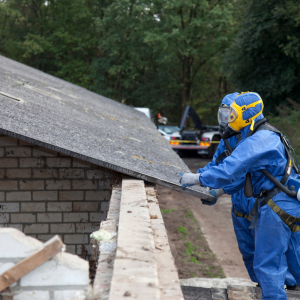
For Florida properties, the risk climbs during renovation and demolition. Any project that involves materials in a pre-1980 structure can release asbestos fibers into the air around workers, neighbors, and whoever lives in that home next. Those health stakes are the reason Florida’s disclosure and licensing rules have teeth.
How to Tell If Your Home Has Asbestos
Sit across from me at your kitchen table, and I’ll tell you what I tell every seller: you can’t see asbestos. No color, no smell, no visible tell. Age of the home is your first clue. Florida homes built before 1980 are the main candidates, especially anything from the 1950s through the early 1970s, when use peaked.
Common asbestos locations in Florida properties include textured popcorn ceilings, vinyl floor tiles, and the mastic adhesive underneath them. Add duct insulation on older HVAC systems, pipe wrap in attics and crawlspaces, exterior cement board siding, and roof shingles on older bungalows. None of that is a guarantee. Plenty of those materials contain nothing at all. A certified lab test on a physical sample is the only definitive answer, which is why guessing from photos on the internet wastes everybody’s time.
Asbestos testing costs $250 to $850 on average, depending on how many samples the property needs and whether bulk samples are sent to a lab or an inspector conducts air monitoring. Cheap, measured against what’s riding on it. Testing after a buyer’s inspector raises the flag mid-contract leaves you reacting instead of steering, and reacting costs you leverage.
Collecting samples in Florida is generally the job of a licensed asbestos consultant. Under Rule 62-257, an asbestos survey by one of those consultants must be completed before non-exempt renovation and demolition work, regardless of the building’s age. Sellers get the next part wrong constantly.
Single-family houses and residential buildings with four or fewer dwelling units usually fall under the residential exemption. The state’s survey and notice rules don’t apply to that kind of home unless the work is part of a larger project. Skipping the step anyway is a poor decision. Knowing what a licensed inspector would find hands you options instead of surprises.
Do Home Inspections in Florida Check for Asbestos?
For years, I assumed general home inspectors flagged asbestos in their standard report. They don’t. That gap has cost sellers I’ve worked with real money.
A standard Florida home inspection covers the condition of the property’s visible systems: roof, HVAC, plumbing, electrical, and foundation. Inspectors aren’t required to test for asbestos, and most don’t have the certification to do so. What they will do is note materials that are consistent with asbestos-containing products based on age and appearance, then recommend that a specialist evaluate them further. That line in the buyer’s inspection report usually triggers renegotiation or, in financed transactions, a loan hold.
If your home predates 1980 and you want to control the story, order your own asbestos survey before you list. Hand buyers the results on day one. Then you’re not scrambling when their inspector’s report lands. Transparency in a Florida real estate transaction is as much a legal protection as a marketing strategy. Even as-is sales require disclosure of known latent defects under Florida law.
Anyone who brings their own licensed asbestos inspector during due diligence will find whatever your pre-listing survey found. Giving it to them up front heads off the theatrical panic of a mid-contract discovery, plus the renegotiation circus behind it. Real estate agents can note it in the listing, cash buyers can price it accordingly, and everybody keeps moving.
Florida Law on Asbestos Disclosure When Selling a House
A seller in South Tampa listed a 1967 bungalow and said nothing about pipe insulation that an inspection he’d quietly commissioned had already flagged. Four months after closing, the buyer found it, hired an attorney, and the seller paid more in legal fees than abatement would have cost. Abatement on pipe insulation isn’t cheap either.
Florida keeps no single statutory disclosure form. What it has is Johnson v. Davis, the 1985 Florida Supreme Court case obligating sellers to disclose known facts that materially affect value and aren’t readily observable. Statute layers specific notices on top of that precedent, including radon and flood history for the property. Known sinkhole activity also counts as a material fact. Asbestos sits squarely inside that disclosure duty.
Sellers must disclose known material defects that affect property value, and known asbestos hazards are among them. No asbestos-specific disclosure law exists here. Staying quiet about it still creates legal liability. The Florida Realtors standard seller’s disclosure form asks directly about asbestos and other toxic materials, and that section trips people up. Answer it dishonestly, and you’ve built liability that outlives your closing.
Failing to disclose can mean rescission of the contract, monetary damages for repairs, punitive damages where the concealment was willful, and FREC discipline for licensees. Your agent carries exposure, too, which is why any decent realtor in Florida will push you to disclose. Hiding it is a bad play, legally and financially, and the short-term comfort isn’t worth much.
Paperwork is what makes a disclosure hold up two years later. Keep the dated asbestos survey, the lab report on every sample, and any abatement invoice or clearance test together in one file. Give the buyer copies and keep your own set after closing. Sellers who can show exactly what was known, when they learned it, and what they told the buyer are the ones who don’t lose these arguments in a Florida courtroom.
On renovation or demolition tied to the sale, the Florida DEP revised Rule 62-257 on March 23, 2025. For covered projects, contractors file a Notice of Renovation or Demolition at least 10 working days before removing any asbestos-containing materials. Your asbestos abatement contractor handles the filing. You own the property, so make sure it happens, because a missed notice can stall the work and your sale with it. Program details sit on the Florida DEP’s asbestos program page.
Repair, Encapsulate, or Remove: Your Options Before Selling

Once the disclosure question is settled, you still have to decide what happens to the asbestos itself.
Repair is the smallest of the three. A contractor seals or covers a limited patch of damaged material, such as a torn section of pipe wrap, without touching the rest of the property. Repair buys time. It doesn’t make the asbestos go away, and an inspector will still flag it.
Encapsulation seals asbestos-containing material with a binding compound, preventing fibers from escaping. It works on intact material: undisturbed popcorn ceilings, vinyl tiles in good shape, pipe wrap that’s still sealed. Encapsulation runs roughly $2 to $6 per square foot, far cheaper than removal for anything that qualifies. Not everything does. Friable, crumbling asbestos has to come out. Encapsulation also leaves the material in place, so whoever renovates or demolishes that home later pays the removal cost then. Anyone with a contractor already lined up builds that future bill into their current offer.
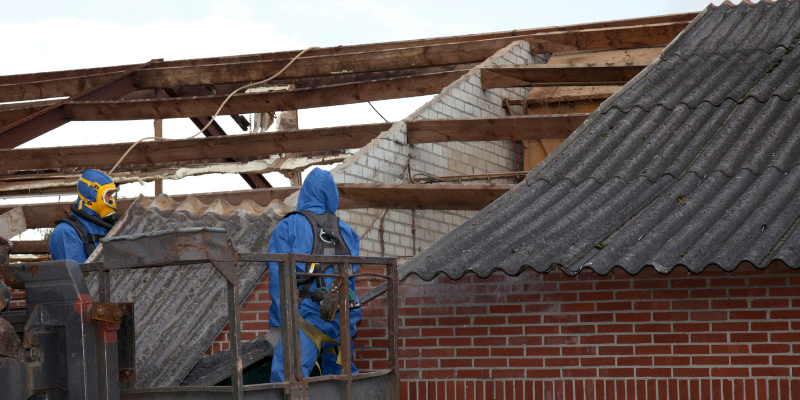
Full asbestos removal, what the trade calls abatement, costs more and takes longer. Interior removal runs about $5 to $20 per square foot, depending on the material and how hard it is to reach. A licensed Florida asbestos abatement contractor must perform the work. Hiring a handyperson isn’t allowed, and the owner-occupant exemption applies only when the building is not for sale or lease. DIY removal leaves the table the moment you list.
Selling as-is, without addressing the asbestos, is a legitimate path. Price the property below market for the asbestos, disclose everything, and let the buyer decide what to do after closing. Plenty of cash house buyers in Florida take this on every week. It makes the most sense when abatement costs approach or exceed the value the work adds to your sale price, which happens more often than sellers expect once contamination is widespread.
Florida’s asbestos abatement program operates under Chapter 469 of the Florida Statutes, and the state must license every abatement contractor and consultant working in the state. Hiring unlicensed help to save money is the shortcut that creates compliance violations, and those can follow the property on title long after you’ve moved on.
Asbestos Abatement Costs and the Financial Impact on Your Sale
One seller I worked with in Carrollwood had a 1974 ranch with asbestos floor tile through the main living areas and duct wrap in the attic. She collected three abatement quotes before deciding anything. The spread between them surprised her. She also called a company that buys houses in Tampa, FL, for an as-is offer.
Paying for full abatement rarely pencils out the way sellers hope. Whole-home asbestos remediation starts around $5,700 and climbs from there, and exterior materials like roof shingles or cementitious siding can drive the cost up. Stripping asbestos-containing material off a roof can run $40 to $125 per square foot, while asbestos siding removal lands closer to $7 to $10 per square foot. On a 2,000-square-foot roof, that bill dwarfs what the neighborhood will pay back.
Removal isn’t the only line item sellers absorb. Permits and hazardous waste disposal add up. Florida’s DEP notification fee under the 2025 rule runs $200 for a hard copy filing, and that same $200 applies to an electronic filing you pay for later. It drops to $100 only when you submit through the DEP Business Portal and pay at the time of submission. Projects in Broward, Hillsborough, Miami-Dade, Orange, Palm Beach, Pinellas, or Sarasota counties that aren’t at county-owned facilities get invoiced by the local program office on its own schedule instead. Ask your abatement contractor which one applies before you budget.
Price the abatement against what it actually adds to your final sale number. In some neighborhoods, clearing the asbestos does open conventional financing and a wider buyer pool. In softer markets, you spend $8,000 to add $5,000. That math doesn’t work for you.
How to Sell a House with Asbestos in Florida for Cash
Sellers who skip disclosure, or try to negotiate around asbestos findings mid-contract, land in the worst spot available. Buyers back out. Contracts collapse. The property picks up a stigma, because word travels fast among agents.
An heir I worked with in Clermont got a job transfer and five weeks to be out of state. She owned a 1968 block-construction house with a carport full of old asbestos-cement panels, sitting vacant. No time for a traditional listing, no budget for abatement, no appetite for months of back-and-forth. We closed it in under three weeks. The buyer understood what he was taking on, priced it accordingly, and needed no one at a bank to bless the condition.
Cash buyers who specialize in as-is properties are the practical answer for many Florida sellers. The combination that sends people looking: asbestos plus a tight timeline, thin funds for asbestos abatement, other repairs waiting, or no appetite for a conventional listing. It works the same way if you need to sell your fire-damaged house. Cash For Houses Pro works with homeowners across Florida in exactly that spot, buying properties as-is, with no remediation, repairs, or staging required before closing. Much of the state’s pre-1980 housing stock sits in Pinellas County, and sellers there usually find us through our cash home buyers in St. Petersburg and we buy houses in Clearwater pages.
Statewide median time to sale was 88 days in July 2026. An asbestos-flagged listing usually runs well past that. A cash closing happens in weeks. About 26.2% of Florida single-family closings that month were paid in cash, so this is hardly a fringe route. The offer may land below full retail. Sellers who total up abatement, carrying costs, agent commissions, and months of mortgage payments often find the cash route leaves more in their pocket anyway, even without bank financing in the picture.
Real estate agents can list and sell homes with asbestos in Florida, but the buyer pool thins out fast. Conventional loan programs can require repairs or remediation before funding. A buyer using FHA or VA financing may not close on a property with known asbestos disturbance until the remediation is completed and documented. Cash buyers skip that problem entirely, which is why sellers in this spot keep calling us for the most efficient way out.
Frequently Asked Questions
Is It Hard to Sell a House with Asbestos?
Harder through traditional channels than most people plan for. Conventional buyers usually need financing, and lenders get skittish about properties with asbestos in poor condition. Buyers paying cash or investors who buy as-is tend to be comfortable because they price remediation into their offer rather than walk away. Upfront disclosure, a pre-listing asbestos survey, and realistic pricing streamline the entire process.
Do Realtors Have to Disclose Asbestos in Florida?
Yes. Under Florida’s material defect disclosure duty, as outlined in Johnson v. Davis, sellers and their agents must disclose known facts that materially affect the property’s value. Known asbestos is exactly that kind of fact. An agent who helps a seller conceal it faces civil exposure and potential professional discipline from FREC.
How Much Does Asbestos Affect House Value?
No fixed percentage applies uniformly across Florida markets, though the effect is real and property-specific. Minor non-friable asbestos that’s known, fully disclosed, and undisturbed might mean a modest price adjustment. A property needing whole-home remediation requires a discount that covers that work, plus a risk premium for the buyer. Sellers who handle it early, through remediation or full disclosure and an honest as-is price, usually lose less value than sellers who let it blow up a contract mid-stream.
What Is the 3-5-7 Rule for Asbestos Sampling?
The 3-5-7 rule specifies how many samples to pull from a homogeneous area of friable surfacing material. Three samples when the area runs 1,000 square feet or less, five between that and 5,000 square feet, and seven above 5,000 square feet. The point is statistical confidence in the accuracy of the characterization of the material’s asbestos content. It comes from the EPA’s AHERA sampling standard rather than Florida statute, and your licensed Florida asbestos consultant applies it during a pre-renovation or pre-demolition survey.
If you’ve got asbestos in a Florida home you’re trying to sell, and you’re not sure which option makes the most financial sense, contact us at Cash For Houses Pro. We’re happy to walk through your situation, give you an honest read on the options, and make an offer if it fits. No pressure, no obligation.
Helpful Florida Blogs