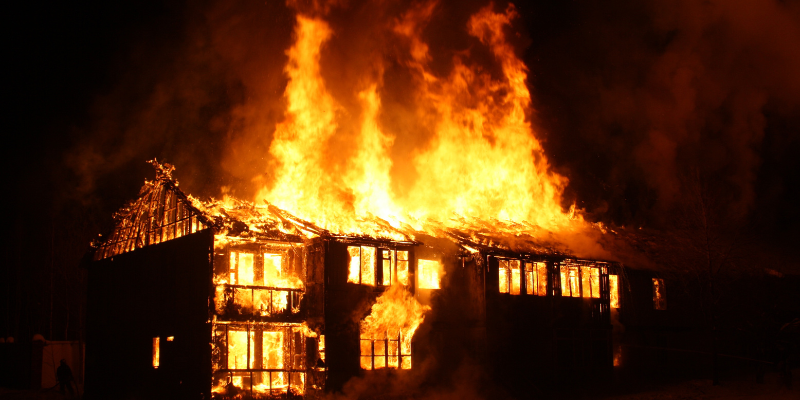
Fire tore through the back half of a New Port Richey split-level on a Tuesday afternoon last year. By Thursday, the heir in Ohio had called us. He was three months behind on the mortgage, the auction was already scheduled, and he faced a flight to Tampa Bay just to board up a house he’d never seen. We bought it as-is the following week, and he never set foot on the property. A fire not only damages a house. It compresses every decision about how to sell a fire-damaged house in Florida into two or three weeks.
You Can Sell a Fire-Damaged House in Florida
Sellers push back on this constantly. “Nobody’s going to buy a burned house.” “The bank won’t allow it.” “I have to fix it first.” None of that holds up. Set those three aside, and your selling options widen right away.
Florida has no rule forcing you to restore a property before you sell it, and you can convey a fire-damaged house in whatever condition it’s in. The statewide median sale price for existing single-family homes was $425,000 in July 2026, according to Florida Realtors. Even a sale at a steep discount off that baseline puts real money in your hands. Right now, that money is draining into insurance premiums, taxes, and utility bills on a house nobody can live in.
The real question is which path fits your situation. Some sellers have the settlement, the time, and the stomach for a six-to-twelve-month renovation. Most don’t. Most are carrying a mortgage, living somewhere else, and watching cash leave every month the property sits empty. For them, a fast sale to an investor isn’t settling for less. It stops the bleeding.
Cash buyers, real estate investors, and companies like Cash for Houses Pro go looking for fire-damaged properties across Florida, because they’ve got the contractor networks and the capital to absorb the repair work.
What Counts as a Fire-Damaged House in Florida
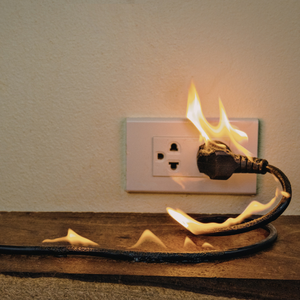
Smoke damage alone renders a property fire-damaged for valuation and disclosure purposes, even when no flame touched the structure. A kitchen fire knocked down in seven minutes still pushes soot through the HVAC system, buries particulates in drywall, and leaves odor in every room. None of it shows at a walkthrough, which is what makes smoke-only houses so easy to underprice.
Lenders treat a property differently the moment fire shows up in its history. A conventional loan generally requires a home that’s habitable and insurable, and unresolved fire damage fails both tests. Your buyer pool shrinks to cash and hard money immediately, no matter how contained the actual damage was.
Inspectors of fire-damaged properties assess the structure, electrical systems, HVAC, soot patterns, and any moisture left by firefighting. That last one blindsides people. A standard interior attack line flows at least 150 gallons a minute, and the EPA puts mold growth as early as 24 to 48 hours after water exposure. In a humid Florida house, that’s a mold problem stacked on a fire problem, and I’ve watched remediation offers double over it. The moisture half of a fire loss behaves like any other leak, so the same steps that help you sell your water damaged house fast in Florida apply here too.
Three tiers are worth knowing. Cosmetic damage means surface soot, odor, and light scorching. Partial structural damage means rooms are compromised, or the roof and wall sections are affected. Total loss means the structure is unsafe or too expensive to save, and each tier draws its own buyer pool and price range.
What to Do Immediately After a House Fire in Florida
Your clock starts faster than most people expect. Under Florida Statute 162.09, a code enforcement board can fine you up to $250 a day for a first violation and $500 a day for a repeat one. An irreparable violation carries a penalty of up to $5,000. Worse, a certified order imposing those fines gets recorded and becomes a lien on your land. Let the fines and the damage run long enough and the county can post the house as unsafe, which is where how to sell a condemned house in Florida picks up.
Get the fire department incident report, which records cause, date, and extent, and carries you through insurance, disclosure, and the sale itself. Call your carrier as soon as you can. Florida Statute 627.70132 bars a new claim outright unless you notify the insurer within one year of the loss, and supplemental claims get 18 months. Board up windows and doors, tarp the roof, and post no trespassing signs. That keeps squatters out and your insurer from calling the damage neglect.
Photograph everything before a single item moves: every room, every damaged belonging, every wall. Your claim runs on that documentation, and so does the disclosure you’ll hand a buyer later. Keep the contractor offers, the repair estimates, and every note from the adjuster.
Then the waiting starts. Florida Statute 627.70131 gives your insurer seven calendar days to acknowledge the claim, 30 days to inspect after you prove loss, and 60 days to pay or deny. That’s the legal outside edge, not a promise. If you plan to wait for the payout before deciding, budget for months of mortgage payments.
Why Florida Homeowners Choose to Sell After Fire Damage
For years, I assumed anyone who called after a fire wanted to rebuild and stay. That’s not what I see. Most people who reach us are already set on selling and just want out cleanly.
Insurance falling short of full reconstruction cost is the thread running through most of these calls. Labor and materials around Tampa Bay have pushed rebuild pricing well past what older policies anticipated. Rebuilding after a total loss costs roughly $180 to $450 per square foot or more, and a policy written five years ago rarely covers that much. So the owner funds the gap out of pocket, or sells and takes what the market gives.
Others are simply done. A fire changes how a house feels, and that isn’t a small thing. Some families move into a rental that night and never want to go back.
Inherited property makes the math obvious. An out-of-state heir with a fire-damaged home in Brandon or Plant City faces permits, contractor scheduling, and carrying costs from another state. Selling as-is erases all of it. Heirs in that spot reach us from all over the area, and we buy houses as-is in Plant City on the same terms.
What Are the Legal Requirements for Selling a Fire-Damaged Home in Florida
Walking away with real proceeds depends on getting the legal side right, and the claims follow you long past closing if you don’t.
In Johnson v. Davis, 480 So. 2d 625, the Florida Supreme Court held that a seller who knows facts materially affecting a home’s value, facts the buyer can’t readily observe, has a duty to disclose them. Fire damage sits squarely in that category.
So fire history counts as a material defect, whether the damage is old or current, repaired or untouched. Disclose the date, the cause, the extent, and any repairs you finished. Skip it, and you’re exposed to rescission, damages, or a fraud claim.
Fraud claims in Florida carry a four-year statute of limitations under section 95.11(3), and the clock starts when the buyer discovers the problem or reasonably should have discovered it. That’s a long tail. Anyone who figures they can paper over a fire and move on carries that risk for years.
Pull the fire department report, assemble the claim file, and gather permits and invoices for any repairs you completed. Cash buyers handle most of this and ask you to sign a disclosure covering what you actually know, which keeps your exposure narrow.
Can You Sell a Fire-Damaged House As-is in Florida
As-is is almost always right when repairs would cost more than they’d add to your sale price.
Nothing in Florida law requires repairs before a sale. Selling as-is means you convey the property in its current condition, with no commitment to fix anything. Buyers who chase fire-damaged homes know what they’re walking into and price it accordingly, so the negotiation runs on reality rather than optimism.
Florida’s median days on market was 72 in July 2026. A fire-damaged listing stretches well past that, because financing knocks out most of your buyer pool. Someone can fall in love with the house and still not get a mortgage until repairs are certified and the property is insurable.
Cash sales skip that. An investor buys the fire-damaged property as-is, conducts their own due diligence, and closes on a schedule that suits both parties. As a company that buys houses in Florida, we work with fire-damaged properties across the state and can put together an offer without you having to fix anything or clear a single piece of debris.
What Happens If You Try to Repair Before Selling in Florida
Fix the house, restore the value, list with an agent, and collect the full market price. On paper, that looks clean. It comes apart in a few predictable places.
Permits come first, and they take time. Fire repairs run through permitting and inspection before a contractor swings a hammer, and county timelines vary enough that your building department is the only reliable source. Then you need an available contractor, with no guarantee of one in a high-demand Florida market. Restoration itself runs $4 to $7 per square foot, averaging near $5.50, covering smoke and soot cleanup, water extraction, and selective repairs. Structural reconstruction gets priced on top.
Say the fire-damaged house is 2,000 square feet. Cleanup alone lands between $8,000 and $14,000 before anyone rebuilds a wall. Add six to eight months of work, then two or three more on the market. All of it while you pay interest, taxes, insurance, and utilities on a house you don’t live in. The gain over a cash as-is sale can vanish completely.
Contractors on fire jobs routinely turn up hidden damage. Soot in attic cavities, smoke-soaked insulation, subfloor rot under the tile. Each discovery pushes the budget further, and most sellers who take this road spend more than they planned and end up waiting longer.
What Are Your Options for Selling a Fire-damaged Home in Florida
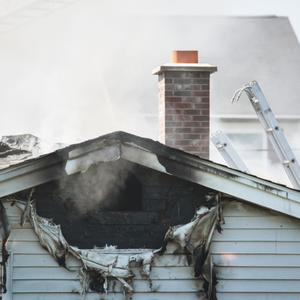
A seller in Clearwater called us after three contractor offers all came in above her insurance payout. She couldn’t afford to repair the fire-damaged bungalow or keep it. Within a week, she had a cash offer and a closing date.
Sellers in her position have three realistic paths.
Repair and list on the MLS. Highest potential sale price, longest timeline, biggest bill upfront. It suits owners with full coverage and the bandwidth to run a renovation from wherever they live.
List as-is on the MLS with a real estate agent. You’ll attract investors and cash buyers, still pay commission, and still wait for the right one to surface.
Sell directly to a cash buyer or real estate investor. Fastest route by a wide margin, with no repairs, no agent fees, and nothing riding on a buyer’s financing. You provide disclosure documentation, agree on a price, and close. For most fire-damaged properties, selling this way nets comparable proceeds once repairs and carrying costs are deducted from the other two.
Calling Cash For Houses Pro gives you a real number to work from, even if you choose a different path. Knowing your floor makes every other decision easier.
What Cash Buyers Look for in Fire-damaged Florida Homes
A property near Lakeland reached us with a collapsed carport, smoke-blackened walls through half the interior, and a garage full of the owner’s belongings. Four weeks later, it was cleared, permitted, and under renovation. A buyer like that sees a project where everyone else sees a write-off.
The offer comes out of a formula. A buyer starts with the after-repair value, what the house would be worth fully restored today, then subtracts repair cost, their margin, carrying costs through the renovation, and the transaction costs when they resell. What’s left is roughly your number, which is why there’s little room to haggle once the math is done.
Two things matter most from your side. Land value and location come first, which is why a fire-damaged home in Winter Park or Longboat Key draws a stronger offer than the same damage in a low-demand county. Severity comes second, because structural damage and cosmetic damage produce very different numbers.
Buyers also want the fire department report and the story of your insurance claim, because a clean paper trail lowers their risk, and lower risk shows up in the offer. Remediation scope counts too. Heavy soot in ducts and attic spaces costs far more to clean than surface work, and that comes out of what a buyer can pay you.
How Much Is a Fire-damaged House Worth in Florida
Appraising a fire-damaged property works nothing like a standard residential appraisal. Automated valuation tools are useless because they can’t see the condition. A licensed appraiser builds from the land up. Lot value first, then estimated reconstruction cost, then a subtraction for the cost to cure. Their figure and a cash offer usually land close together, because both come from the same arithmetic.
What sellers underestimate is holding cost. Each month the property sits, you’re covering interest, taxes, and insurance on a property earning nothing and getting worse. A smaller offer that closes in two weeks routinely beats a bigger one that takes nine months to arrive.
Location does the heavy lifting in Florida. A lot on Clearwater Beach or in downtown St. Petersburg holds value nearly independent of what’s standing on it. The same damage on an inland lot with fewer comparable sales gives a buyer far less to work with.
How to Sell a Fire-Damaged House As-is in Florida
Start with your documents. The fire department incident report, your claim file, and any settlement paperwork, contractor estimates, plus permit records if work was done. Nothing has to be perfect, but an organized file moves faster and pulls stronger offers.
Then contact buyers and real estate investors who specialize in fire-damaged property, not a first-timer learning on yours. Cash house buyers in Clearwater, FL, Lakeland, and St. Petersburg all handle these properties the same way. An experienced buyer walks the property within a day or two of your call and follows with a written offer. At Cash For Houses Pro, our process is built around fire-damage situations, so we know what to look at and what to ask.
Read the offer closely. The price should reflect the property’s condition, and you want clarity on which closing costs are covered, since most legitimate cash buyers handle title and escrow on their end.
Once you accept, the buyer runs the title search and any lien verification. You sign, collect your funds, and transfer the deed. No showings, no open houses, no last-minute inspection killing the sale. That timing gap is the most undervalued piece of the as-is calculation.
How Fast Can You Sell a Fire-Damaged House in Florida
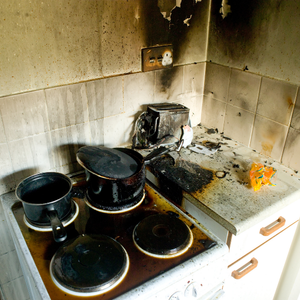
A fire-damaged house on the open market sits on the market longer than a comparable listing in sellable condition, sometimes much longer. Most people scrolling through Zillow can’t afford it, and the few who can don’t know what to offer.
That costs you. Every month of delay adds to mortgage payments, taxes, insurance for a vacant, fire-damaged home, and any accruing code fines. Sellers who wait and see usually find the position worse six months later, not better.
A woman in Sanford called us while she was moving her mother into assisted living. She was handling that, her own household, and a family property with smoke damage through the kitchen and garage. Speed wasn’t a preference for her. It was the only thing that worked. We closed in eleven days.
Cash buyers can close in seven to fourteen days once an offer is accepted. Speed like that comes from taking the lender out. No appraisal ordered, no underwriting queue, nothing to collapse when a financing contingency fails. Funds get wired at closing, and you’re finished.
If you’re facing a foreclosure timeline, mortgage arrears, or a code enforcement deadline, speed isn’t a bonus. It’s the whole thing, and one fast sale can resolve all three at once. Your county building department can confirm your compliance date, which gives you a firm frame for negotiating a closing timeline.
FAQs
Can You Sell a Burned-down House?
Yes, in Florida, even when the house is a total loss. Cash buyers and real estate investors regularly take on fire-damaged and total-loss properties because they specialize in renovation or teardown-and-rebuild. You’ll disclose the full damage history and work with a buyer who doesn’t need a financing contingency.
Does a House Lose Value After a Fire?
It does, and severity and location drive how much. Cosmetic smoke damage costs far less to cure than compromised framing or wiring, and that gap lands directly in what buyers offer. Even after a full restoration, some buyers and their lenders treat fire history as a risk factor, which can affect refinance appraisals and future resale.
How Long Are You Liable for Repairs After Selling a House?
Four years, as a general rule. Florida’s limitations period on a fraud or nondisclosure claim runs from the date the buyer discovers the defect or reasonably should have discovered it. Careful disclosure at the time of sale is your best protection. Document what you knew, when the fire happened, and what got repaired, and the record works for you instead of against you. If the damage history is significant, an hour with a licensed Florida real estate attorney is worth the money.
Is It Risky to Buy a House That Had a Fire?
Not necessarily, as long as you’re working with licensed contractors and doing real due diligence. The risk lives in what’s hidden. Soot in HVAC systems, smoke-soaked insulation, and structural problems that the original repairs never touched. An inspection by a fire-damage specialist, plus a full repair and permit history from the seller, separates a sound buy from a bad one.
If you’re sitting on a fire-damaged property in Florida and working out your next move, we’re happy to talk it through. No obligation, no pressure to decide anything on the call. Contact us when you’re ready, and you’ll get a straight answer on what the property is worth and how fast we can close.