

A screwdriver sinks into a door frame like it’s wet cardboard. That’s how most Florida sellers find out. It rarely starts with a pest inspection, just a casual poke at trim that looked fine last spring. Termites don’t make noise. They eat wood from the inside out, and by the time the surface gives, the colony has worked that beam for years. You can still sell a house with termites in Florida. No Florida law bans the sale of a property with termite damage, active or old. You can’t hide it, though, and you shouldn’t throw money at repairs until you know which path pays you back.
Yes, You Can Sell a House with Termites in Florida
“Nobody will touch a house with termite damage.” I hear some version of that most weeks, and it’s wrong. Homes with live drywood termites change hands in this state all the time, through agents, at auction, and straight to investors like me who buy as-is.
Your buyer pool shifts and so does your number, because a retail buyer with a mortgage usually needs a wood-destroying organism report before closing. VA loans require one statewide. FHA requires one when the appraiser spots signs of pests, and many conventional lenders want a clean report anyway. Investors look at two other factors: the repair estimate and the property’s value once the work is done.
So whether you can sell was never the real question; who you’re selling to matters more, along with how much of the damage you’ll pay to fix first.
Last year, four siblings called me from Ohio about their father’s block house in Lakeland. He’d left thirty years of belongings inside. The garage was stacked ceiling-high with boat parts, and subterranean termite tubes climbed the laundry room wall behind the dryer. Nobody wanted a second flight down, so we gave them a clean exit where nobody sorted a box. The sister who’d been handling the utilities asked if she had to haul the boat parts to the dump first. She didn’t have to, and that’s usually the part people can’t believe.
If your Florida home has termite damage, Cash for Houses Pro can make a cash offer for the property as-is, so you can skip repairs, cleanup, and hauling away unwanted belongings.
The WDO Report and Why Your Buyer’s Lender Cares
Florida runs this differently than most states. Termite findings go on FDACS Form 13645, the only WDO form recognized for Florida sales. The inspection must be conducted by a pest control business licensed under Chapter 482, by its certified operator, or by an employee carrying a state ID card. A regular home inspector can’t sign it unless they work under that license. The attorneys at Yates Anderson published a helpful breakdown of what the form covers.
Findings land in a few buckets: live bugs, evidence of past infestation, visible damage, and signs of earlier treatment. “Treated in 2019, no live activity” reads very differently to a buyer than “active drywood termites in attic framing.” Same house, very different offers.
Don’t mistake the report for a guarantee. It covers what the inspector could see and reach in one day, and sealed walls or crawl spaces can hide plenty.
Access is your job, because if the inspector can’t get into the attic, the report says “inaccessible,” and that word won’t help you. Before the visit, clear the attic hatch and the crawl space entry. Open the garage and sheds, and pull stored boxes away from the walls. Put the dog somewhere else for an hour. Ask for photos with the report, since “visible damage, north wall” means a lot more to a contractor with a picture attached.
Lenders read this report closely, and when active infestation is found on a government-backed loan, underwriters often require treatment and clearance before they fund. Many conventional lenders follow suit. One checkbox can sink your sale.
If your home has termite issues that could complicate financing, contact us for a cash offer. We buy houses as-is, so you can avoid costly repairs, treatment, and lender delays.
What Florida Law Says You Have to Tell Buyers

Staying quiet costs more than extermination would. Florida’s disclosure rule comes from a 1985 Florida Supreme Court case, Johnson v. Davis, rather than a state form. You have to disclose known facts that materially affect value when a buyer can’t easily see them. Termite damage counts. So do past infestations, treatments, and repairs to a rotted subfloor. Here’s a plain-language summary of the seller’s duty to disclose known defects in Florida.
An “as is” clause doesn’t erase that duty. Courts here have said so, and anything you knew about before closing still gets shared. I’ve watched agents treat “as is” like a legal force field. It isn’t one.
Be specific about when the termites were found, who treated them, which rooms had damage, and who made the repairs. If you inherited the house and don’t know its history, put that in writing. Nobody can make you disclose what you never knew.
Suspicion is where people slip. A springy bedroom floor you never checked belongs on the form. So does the sawdust you swept off a windowsill two summers ago. Write down what you saw, when you saw it, and what you did about it. You’re reporting, and the buyer’s inspector can handle the diagnosing.
Hand the disclosure over early, with the listing or the contract. A late one looks like damage control. A seller who passes along a pest control invoice and a photo of the treated spot looks like someone with nothing to hide. Keep a dated copy of everything you gave the buyer, because that file is your whole defense if questions come up years later.
What Extermination and Repairs Really Run in Florida
Treatment is rarely the expensive part, since the carpentry behind it is more costly. Florida termite treatment generally runs $300 to $3,500, depending on species and method. Subterranean termites get liquid barriers or bait systems aimed at colonies in the soil. Drywood termites spread through the attic framing, which often means tenting the whole house, typically $1,200 to $3,500.
Tenting is more of a hassle than the price suggests. Everyone leaves, pets too, usually for a couple of nights. You’ll bag food and medicine or take them out, and the gas gets shut off. That’s nothing in a vacant house, but plan around it if someone lives there.
Replacing wood is where the math turns. Once a contractor opens a wall and finds damaged subfloor or a hollowed-out beam, the estimate can climb past $10,000. Floors take the worst of it in older, low-built Florida homes. I’ve opened plenty of 1960s Pinellas County bungalows where the flooring looked perfect, and the frame under it was lace. When termites have eaten into load-bearing framing, the sale starts to look a lot like selling a house with foundation problems in Florida.
Read every repair estimate for what it leaves out. Does it cover resetting fixtures, matching flooring, drywall, and paint, as well as permits? Vague estimates grow once the wall is open. Ask what happens if the contractor finds more damage, and get that answer in writing.
Ask the pest control company about a termite bond, too. Annual inspections show a buyer someone’s watching the problem. Transferring a bond to the new owner usually takes a call and a fee, so ask what yours charges. Some bonds cover only retreatment, and others pay for repairs to new damage, so read the fine print. Your homeowner’s policy won’t help, since standard policies exclude insect damage.
Get more than one estimate. Two contractor estimates on the same house can land far apart, and the cheaper one isn’t always worse.
Fix the Termite Damage First, Then List
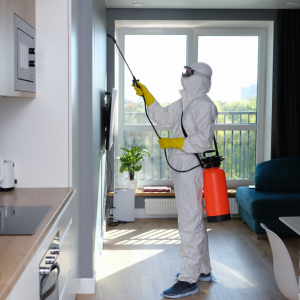
This path makes sense when the damage is small and cosmetic. Spot-treat the drywood pocket in the window kicker, replace the trim, keep every invoice, and list the house clean. Most buyers read a small repair with clean paperwork as routine upkeep. Investor home buyers in Orlando and other Florida cities may also consider properties with termite damage, giving you another option if repairs aren’t worth the cost.
Sellers get hurt when they estimate the repair wrong and a contractor tears into what looked like one bad board and finds three more. Drywood termites work from the inside, so the worst of it often stays hidden until the trim comes off. Now you’re sixty days into a remodel, carrying the mortgage, and your spring listing window has closed behind you.
Before you commit, run the honest math. Add the repair cost to the mortgage, taxes, insurance, and utilities for every month the work drags, then add commission on the back end. Will the repaired house really appraise far enough above the as-is number to cover all that? Sometimes it does, and I’ve seen it work out clean. Other times you’re spending twelve thousand dollars to gain nine.
If you go this route, get a licensed pest inspector out before the contractor starts. A written report shows where the activity is and whether the wood behind the trim is still sound. That paper keeps your repair estimate honest and gives the buyer’s inspector something to read instead of something to guess at. Pass it along with your invoices and the clearance letter, and the termite line on the disclosure form becomes a closed file.
Disclose the Damage and Price It In
Listing as-is with full disclosure works, and I’d argue it’s underused. A comparative market analysis from a good agent gives you a baseline value. Subtract a solid repair estimate from there and let the number stand. You owe buyers the disclosure under state law anyway, so you may as well get credit for being upfront.
Buyers respect a seller who hands them a WDO report and a contractor’s estimate on day one. What they punish is damage that shows up as a surprise during inspection, because people start wondering what else is hiding, and I’ve watched trust collapse fast once that happens. Expect a smaller crowd and a longer wait, plus at least one buyer who tries to haggle anyway. A clear paper trail turns the damage into a known line item they can plan around.
Hold your line when that happens. If your price already reflects the estimate you disclosed, a buyer asking for the same cut twice is testing you. Two contractor estimates in the folder make that talk short. Offer copies of both and invite their inspector to check the numbers. If they still send a repair list, it helps to know when a seller can legally refuse to make repairs after a home inspection.
Treat any active infestation before you list, even if the repairs go to the next owner. A treatment certificate with a transferable warranty shows the termites are gone. Some loan types want proof of treatment before closing, so having it ready keeps more buyers in play. File the treatment invoice with your WDO report and estimate, and every document a buyer needs sits in one place.
Sell As-is to a Cash Buyer

Investors price termite damage into the offer and move on, which means no lender clearance and no repair escrow. No financing contingency can fall apart two days before closing. You won’t pay for treatment or wood repair before the house can sell, either. That holds anywhere in the state, so you can sell your house fast in Florida for cash even when the WDO report looks rough.
You’ll net less than you would on a fully repaired retail sale. That’s the trade, and anyone who says otherwise is selling something. You get certainty and speed in return. Those count for a lot when a house sits vacant, an estate needs settling, or a second mortgage drains your account each month. Cash house buyers in St. Petersburg and the surrounding Florida cities can provide another option, and two or three offers show you what the damage is really costing you.
Before you sign, ask the buyer three things. How did they arrive at the number? Are they buying the house themselves or assigning the contract to someone else? What would make them come back and ask for less? Get the answers in writing if you can, and keep them with the offer.
A buyer who answers all three plainly usually closes. The ones who dodge that last question come back later wanting a discount. If a buyer won’t explain their number, it’s fine to walk away and call the next one.
Frequently Asked Questions
Should You Buy a House That’s Had Termites Before?
Often, yes. A house that was properly treated, repaired by a licensed contractor, and kept under an active bond with annual inspections can be a safer bet than an untreated one that nobody’s looked at. You want paperwork: the WDO report, the treatment invoice, the repair receipts, and a transferable warranty. Walk away from a seller who can’t produce any of it and won’t let your inspector into the attic or crawl space.
Do I Have to Fix Termite Damage Before Selling?
No law requires it. Your buyer’s lender might, and that’s the real limit most sellers run into. If you’re selling to someone paying cash, repairs just get priced in, and you can hand the problem over with the keys.
Will a Termite Disclosure Scare Off Every Buyer?
It thins the crowd without emptying it. Buyers here know Florida has termites, and a documented, treated history reads as careful ownership. The sales that fall apart are the ones where damage surfaces late, and the buyer feels misled.
If you’re sitting on a house with termite damage and you’re not sure which direction makes sense, we’re happy to talk it through. Tell us what you’re dealing with, and Cash for Houses Pro will give you an honest read on what the property’s worth as-is and whether selling direct even beats listing it. Call us at (813) 491-8991 to discuss your options. No pressure, no obligation, and no hard feelings if you decide to fix it up and go the traditional route instead.
Helpful Florida Blog Articles
- How Much Equity Do I Need to Sell My House in Florida
- Selling Tenant-Occupied Property in Florida
- How To Sell My House to a Developer
- Can I Sell My House and Still Live in It
- Selling a House With a Pending Lawsuit
- Can I Sell My House Below Market Value?
- Do I Need a Lawyer to Add a Name to a Deed
- Can a Jointly Owned Property Be Sold by One Owner in Florida
- Should You Replace the Carpet Before Selling a House?
- Can an HOA Take Your House in Florida?
- How to Sell a House with Termites in Florida