
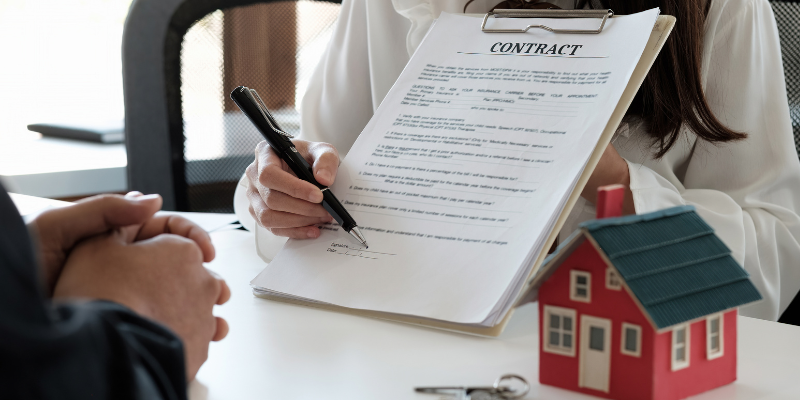
Two names on a deed, two very different plans for the same house. That’s how most of these calls start. A sister in Tampa wants out of an inherited duplex. Her brother in Ocala wants to hold it another five years, and neither one knows who has the legal right to do what. The law gives clear answers here, though they hinge almost fully on the words printed on your deed. Whether one owner can sell jointly owned property in Florida without the other comes down to that wording.
Can One Owner Sell Jointly Owned Property in Florida Without Consent?

Sign a deed for a property you only half own, and you’ve signed over just half. The buyer doesn’t get the house. They get your co-owner as a new roommate on the title, and almost no one wants to buy into that.
A tenant in common may sell or mortgage their own undivided interest without asking. That’s real, but it’s also close to unsellable on the open market, since title insurers get nervous and lenders won’t lend against a small slice of a single-family home. The few investors who buy partial interests price in the legal fight ahead, so expect a steep discount off your proportional share.
Joint tenants hit a different wrinkle. Signing over your interest severs the joint tenancy as to that share. The survivorship feature goes away, and the new owner holds as a tenant in common. Plenty of people have wrecked a survivorship plan with one quitclaim deed they thought was routine.
Married couples holding as tenants by the entirety can’t do any of this. That estate belongs to the marriage itself, so one spouse acting alone can’t peel off a half and sell it. For a main home, Florida’s constitutional homestead protections add another layer. Your closing attorney or title agent will tell you who has to sign the deed before it gets recorded.
Getting every owner to sign off on a whole-property sale often brings in more money than selling fractional interests or waiting on a court-run auction. It’s worth pushing for early. Full agreement won’t always happen, and that’s the gap Florida’s partition law fills.
If getting every owner to agree isn’t realistic, Cash for Houses Pro can make a cash offer for your share or the property, giving you a way to move forward without waiting for a lengthy dispute or court process.
What Rights and Limitations Does a Co-owner of Property Have in Florida?
“Can I just sell my half?” Nearly every co-owner asks us that first. The answer depends on how the title reads, because Florida has three types of co-ownership and each works its own way.
A deed listing two or more owners defaults to tenancy in common. Under the survivorship statute, that’s what you get unless the deed clearly says it’s something else. Tenants in common can hold unequal shares, and each owner can leave their piece to an heir. Nothing passes on its own at death. Joint tenancy with right of survivorship needs that language in the deed, since Florida won’t presume it. Tenancy by the entirety is only for married couples. It treats the couple as one owner of the whole property rather than two owners of halves.
No matter how title’s held, every co-owner has the right to possess the entire jointly owned property. Not a room or an acre, the whole thing. Your brother can’t lock you out of the Clearwater cottage because he pays the lawn guy.
That right comes with duties, and they surprise families more than the ownership rules do. Say one owner covers the taxes, insurance, and a roof repair for six years. That owner can often claim credit for those payments when the property is divided or sold. A co-owner who takes in rent may also owe the others an accounting of that income. Courts sort out these credits through that accounting, so save the canceled checks.
Florida’s median sale price sat at $383,403 in August 2026, up 0.9 percent from a year earlier, per Redfin’s statewide data. Half of a Florida home at that price is real money, which is why these fights turn sharp.
On jointly owned property, what a co-owner can’t do is act for the others. You can’t sign away their share or mortgage their interest. You also can’t hand a buyer clean title to the whole parcel on your signature alone. If you’re looking for a simpler sale, a cash-for-houses company in North Port and the surrounding Florida cities may be an option.
Can I Force the Sale of a Jointly Owned Property in Florida? (What Happens During a Partition Action)

Chapter 64 of the Florida Statutes governs partition, and the right to bring the suit is close to total. Section 64.011 says partition actions are in chancery. Under section 64.022, you file in a county where the land, or any part of it, sits. Any co-owner can file, and your co-owner’s refusal isn’t a defense. Florida cash buyers may also provide an alternative to going through a lengthy partition action.
Courts have two main results. Partition in kind splits the land into separate parcels, each with its own title, which can work for a forty-acre grove in DeSoto County. It won’t work for a townhouse in St. Petersburg. Partition by sale means the court orders the whole jointly owned property sold through a special magistrate or the clerk, often at public auction. Proceeds get split by ownership percentage. If the shared home is in St. Pete, you can sell your house fast in St. Petersburg FL and skip the courthouse auction.
Inherited land can follow its own track. Florida adopted the Uniform Partition of Heirs Property Act in 2020, and it now sits in sections 64.201 through 64.214. It covers a tenancy in common with no agreement governing partition, where at least one heir took title from a relative. A 20 percent family test applies too, measured by interests held or by how many cotenants are relatives. The court orders a valuation first, and cotenants who didn’t ask for a sale then get a chance to buy out the ones who did. Only if that buyout falls short does the court divide the land or order an open-market sale, sealed bids, or an auction.
Co-owners nobody can find can still be served by publication.
Costs add up fast. Attorney fees, filing costs, and a special magistrate’s fee all come off the top, and section 64.081 splits them by each owner’s interest. We’ve watched siblings spend more in litigation than the difference they were arguing about. Partition is leverage. As a threat that pushes both sides to settle, it’s great. Dragged into a two-year war, it’s a wealth transfer to the lawyers.
How Do You Stop a Partition Action in Florida Court?
If you’ve been served with a partition action and want to keep the house, treat the lawsuit as a deadline. You have real options, and each one runs out.
Buying out the filing party is the cleanest route. For heirs’ property, the statute builds in that buyout right, and the price comes from the court’s valuation. If not, you’re on your own. Get an appraisal, line up mortgage financing, and put a written offer on the table. Freddie Mac’s 30-year fixed rate averaged 7.03 percent on September 24, 2026, so a cash-out refinance costs more than it did four years ago. Run the payment before you promise a number.
Old paperwork can hand you a defense. A signed waiver of partition rights, or an operating agreement with a buy-sell clause, may defeat the suit outright. Dig through the closing file, because families forget these papers exist. A co-owner who paid the taxes and insurance for a decade can also claim those credits.
Mediation is where a lot of these cases end, and Florida judges can send a case there, which many do before trial. A good mediator can settle in one afternoon what months of motions couldn’t. Mediate before anyone files, since a lawsuit hardens both sides and adds a bill. If a case is already on file, our guide to selling a house with a pending lawsuit explains how a sale can still close.
At times the smartest defense is selling on your own terms. A private sale lets the owners pick the buyer and the closing date, and decide whether repairs happen. Florida Realtors put the statewide median condo and townhouse price just under $298,000 in August 2026. A forced court sale isn’t built to chase top dollar. Selling as-is to a cash buyer can net all of you more, especially if you attract investor home buyers in Orlando and other Florida cities, and the litigation ends at closing.
How Does a Florida Probate Lawyer Help Property Co-owners?

A jointly owned property often stalls over the deed. A deceased co-owner’s name may still be on title, and no buyer’s title company will touch it until the chain gets cleaned up. That’s probate attorney work, boring but vital.
Your probate lawyer sorts out who owns what. Say a deceased co-owner held as a tenant in common. Their share flows through their estate to heirs or devisees, and someone has to open the estate before that interest can be conveyed. Formal administration, summary administration, and a determination of homestead proceeding each fit different facts. Picking the right one saves months, and families who guess wrong watch cases drag on. Your attorney can also check whether Florida’s homestead rules limit how the property passes. Our walkthrough on selling a probate house in Tampa, FL shows how that estate work plays out once heirs decide to sell.
Good counsel earns the fee in quiet ways too. Drafting a family settlement agreement that four siblings will sign is one. A careful corrective deed is another, since rushed ones stall closings. Your lawyer can get a personal representative appointed with power to sell, then work with the title underwriter so the closing doesn’t collapse a week out.
Spend on clearing title and one good hour of advice about your ownership form. Don’t spend it litigating who deserved the house more.
Florida’s market still rewards clean paperwork. Statewide single-family inventory fell 13 percent year over year in August 2026, per Florida Realtors, so buyers have fewer homes to choose from. Sellers who can bring clean title to the closing table are the ones who win.
If you’re dealing with a jointly owned property and want to sell, you can contact us for a cash offer and learn what your options look like without obligation.
Frequently Asked Questions
Can One Co-owner Force a Sale of Property in Florida?
Yes, in most co-ownership situations. Any tenant in common or joint tenant can file a partition suit in circuit court, and the other owners can’t block it just by saying no. Married couples holding as tenants by the entirety are the exception while the marriage lasts, because that estate isn’t open to partition the same way. Qualifying inherited land runs through the heirs property rules covered above, which give non-filing owners a first shot at a buyout.
What If My Sibling Wants to Sell and I Want to Keep the House?
A buyout is your strongest position, so move on it early instead of waiting on the court’s timeline. Get a current appraisal, see what a lender will approve, and then put a written offer in front of your sibling with a real closing date. If financing falls through, a private sale where you both approve the buyer and terms usually beats a court auction. Mediation costs far less than a full trial, and it settles plenty of these fights.
Do All Heirs Have to Agree to Sell an Inherited House in Florida?
Not to start the process, but yes to close a voluntary sale. Everyone on title has to sign the deed, so one holdout can stall a regular listing for as long as they like. That’s the exact problem partition exists to solve. It’s also why many inherited-property sales go through a buyer willing to buy a single share or wait out a slow signer. The other path is often a year in court and a smaller check at the end.
What Happens to the Mortgage When Co-owners Sell?
It gets paid off at closing from the proceeds, and what’s left is divided by each owner’s share. If one co-owner has made the mortgage payments alone, they can usually claim credit for them in an accounting. Taxes, insurance, and necessary repairs count too. Keep receipts. Courts and buyers respond better to a paper trail than to what someone recalls.
If you own a piece of Florida property with someone you no longer agree with, you don’t have to have the whole thing figured out before you talk to somebody. A short conversation about what you own, what it’s worth today, and your options costs you nothing and usually shortens the road considerably. Reach out to us at (813) 491-8991 when you’re ready, and bring your questions. Cash for Houses Pro can help you understand your options, with no obligation attached to finding out where you stand.
Helpful Florida Blog Articles
- How Much Equity Do I Need to Sell My House in Florida
- Selling Tenant-Occupied Property in Florida
- How To Sell My House to a Developer
- Can I Sell My House and Still Live in It
- Selling a House With a Pending Lawsuit
- Can I Sell My House Below Market Value?
- Do I Need a Lawyer to Add a Name to a Deed
- Can a Jointly Owned Property Be Sold by One Owner in Florida